
Finance Minister Nirmala Sitharaman stated that the Reserve Bank of India (RBI) will persist in its efforts to prevent excessive volatility in the rupee, which has significantly depreciated against the US dollar due to global uncertainties, despite India's strong macro-economic fundamentals.

US Secretary of State Marco Rubio's visit to India this week underscores the complex dynamics of global energy policy, as Washington re-evaluates sanctions on Russian oil buyers amidst India's continued reliance on Russian crude.

Former Sri Lankan president Gotabaya Rajapaksa has moved the Supreme Court seeking protection from arrest under anti-terrorism laws in connection with the 2019 Easter Sunday bombings. This appeal follows the dismissal of his previous petition by the Court of Appeal and an existing overseas travel ban.

Nepal's Hindu groups have sought an all-party discussion on restoring Hindu-nation status within three months.
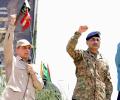
Pakistan Army Chief Field Marshal Syed Asim Munir has described militants operating in Balochistan as 'foreign-sponsored proxies' actively working to destabilise the province and obstruct its development.
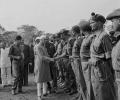
The conversations on July 22 and 23, 1962, meetings in Geneva between V K Krishna Menon, India's defence minister at the time, and Chinese vice premier Chen Yi are important because, had they been followed up, the subsequent border war may perhaps have been avoided, notes former foreign secretary Shyam Saran.

Pakistan's Defence Minister Khawaja Asif has issued a stern warning that the Makkah Defence Alliance, a newly formed pact between Pakistan, Saudi Arabia, and Turkiye, stands ready to activate its collective defence provisions in response to escalating Houthi attacks on Saudi Arabia.

A senior Pakistan Army general has confirmed the presence of Pakistani troops in Saudi Arabia, operating in "multiple capabilities" and "domains" amidst escalating Houthi attacks. This deployment is linked to the Makkah defence pact, a trilateral agreement with Turkiye and Saudi Arabia for collective deterrence, though specific details remain classified. Both Pakistan and Turkiye emphasise the defensive nature of their involvement.

President Droupadi Murmu, Prime Minister Narendra Modi, and Vice President C P Radhakrishnan attended Dussehra celebrations in New Delhi on Tuesday. Effigies of Ravan, Kumbhkaran, and Meghnath were burnt at various Ramleela grounds, with dignitaries delivering messages on truth, righteousness, and fighting social evils. One committee also burnt a cockroach effigy to symbolise filth, leading to a complaint from AAP Delhi chief Saurabh Bharadwaj.

Maratha quota activist Manoj Jarange has released an audio clip purportedly claiming a Rs 500 crore payment was delivered to him through Shiv Sena MP Shrikant Shinde, alleging a conspiracy to silence him. This comes a day after Deputy CM Eknath Shinde challenged him to prove similar allegations. Ruling party leaders have hit back, questioning the clip's veracity and demanding a forensic probe, while Jarange insists on a thorough investigation by top state and central leaders.

Israel has implemented new aviation security directives, barring pilots and cabin crew from countries without diplomatic ties, including Pakistan, from entering its airspace. This follows a hijacking attempt last month on a flight to Israel, where Indian Captain Smit Machchhar was injured while thwarting the plot. The restrictions affect over two dozen nationalities and have prompted airlines like Air France and United Airlines to adjust crew assignments.

The Indian Cabinet has approved Fairfax Financial Holdings' Rs 52,878 crore bid to acquire a 60.72 per cent stake in IDBI Bank, marking the country's largest foreign direct investment in the financial sector.

Prime Minister Narendra Modi, in bilateral talks with Chinese President Xi Jinping, emphasized that both nations must show sensitivity to each other's core issues and be guided by mutual respect, sensitivity, and interest. Modi highlighted the critical importance of peace and tranquillity along the Line of Actual Control for the development of India-China relations, while also addressing concerns regarding Taiwan and Tibet.

Saudi Arabia's Deputy Foreign Minister Adel al-Jubeir visited India on Thursday to meet with top Indian officials and discuss de-escalating tensions between India and Pakistan. Al-Jubeir's visit followed India's military strikes on terrorist infrastructure in Pakistan and Pakistan-occupied Kashmir. He met with External Affairs Minister S Jaishankar and discussed the situation, emphasizing India's commitment to combating terrorism.

Iranian President Masoud Pezeshkian concluded his visit to India for the 18th BRICS Summit, announcing that Iran and the UAE agreed to move past previous tensions. This diplomatic breakthrough occurred during talks with Abu Dhabi's Crown Prince on the summit sidelines. Pezeshkian also met with PM Modi to discuss bilateral ties and West Asia developments, with Modi emphasising dialogue for regional peace. The BRICS summit adopted the New Delhi Declaration 2026, calling for global governance reforms and de-escalation in West Asia.

American singer Mary Millben has become a prominent figure in Indian political discourse due to her outspoken support for Prime Minister Narendra Modi, using social media to defend him against critics and appeal to young Indians, despite her musical career being less known in the country.

External Affairs Minister S Jaishankar has publicly acknowledged India's intensified diplomatic efforts to resolve the Ukraine conflict, engaging directly with both Kyiv and Moscow. India is focusing on critical issues like Black Sea shipping safety, grain exports, and energy supplies, moving beyond its previous advocacy role. Jaishankar also highlighted India's historical ties with Russia and discussed the evolving global geopolitical landscape, including the repositioning of the US and the rise of China.

Congress leader Rahul Gandhi launched a scathing attack on the BJP-RSS, labelling them a "bunch of jokers" with no understanding of India, and criticised Prime Minister Narendra Modi's foreign policy as merely "hugging leaders." He also claimed the RSS has become an instrument of large capital, serving Adani and Ambani, and vowed that the Congress would keep pressure on the government until Modi and Shah resign. The BJP hit back, calling Gandhi immature and out of depth.

India has expressed serious concern over Houthi attacks on Saudi Arabia's civilian infrastructure and economic assets, stating that such actions threaten regional stability and freedom of navigation through the Bab-el-Mandeb strait. External Affairs Minister S Jaishankar discussed the issue with his Saudi counterpart. India also condemned the targeting of commercial shipping after an Indian national went missing following an attack on a Panama-flagged ship off Oman.

Over Rs 180 crore was incurred on Prime Minister Narendra Modi's visit to 23 countries including the US, the UK, France, China and Japan in 2025, according to data shared by the government.
A working paper by the Economic Advisory Council to the Prime Minister (EAC-PM) reveals a continuous decline in the rate at which foreign-owned firms invest in fixed assets in India since the FY20 peak, contrasting with a steady increase from Indian business groups.

The US rejected Iran's proposal to reopen the Strait of Hormuz, citing Tehran's demands for sanctions relief and access to frozen assets before nuclear program negotiations. US Ambassador Mike Waltz called the offer a "cynical attempt," while Iranian Foreign Minister Seyyed Abbas Araghchi disputed Waltz's account and reiterated Iran's readiness for both diplomacy and renewed hostilities. President Trump expressed confidence in winning the conflict soon and keeping all options, including military strikes, on the table, with denying Iran a nuclear weapon as the primary objective.

The Swadeshi Jagran Manch (SJM) has urged the Indian government to deny permission to Elon Musk's Starlink for commercial satellite broadband services, citing national security concerns. The RSS-affiliated organisation highlighted issues with data bypassing Indian gateways and the potential for misuse by hostile actors, advocating for indigenous solutions.

The Chhattisgarh Economic Offence Wing/Anti-Corruption Bureau (EOW/ACB) has filed its 10th supplementary charge sheet in the alleged liquor scam, accusing 20 individuals, including former state Congress treasurer Ramgopal Agrawal, and 22 firms. The 27,000-page document details illegal liquor production, hawala transactions, and investment of illicit proceeds. The scam, estimated by the ED to be between 2019 and 2022, involved a complex network of illegal liquor sales, duplicate holograms, and routing of funds.

National Security Advisor Ajit Doval engaged in Special Representatives talks with Chinese Foreign Minister Wang Yi in Beijing, focusing on the India-China boundary question and enhancing bilateral relations. These crucial discussions precede Chinese President Xi Jinping's anticipated visit to New Delhi for the BRICS summit, aiming to address persistent border differences and stabilise ties strained by past conflicts like the Galwan Valley clash.

Top defence officials from Saudi Arabia, Pakistan, and Turkiye have affirmed their commitment to the Makkah Defence Alliance, a trilateral pact aimed at collective security against threats, particularly from Yemen's Houthi rebels. The alliance, formed last month, considers an attack on one as an attack on all, and its members met in Riyadh to discuss intelligence sharing, military coordination, and capability integration to defend Saudi Arabia's security, sovereignty, and territorial integrity.

Indian and Chinese military officials have held corps commander-level talks in Arunachal Pradesh to review the Line of Actual Control (LAC) situation, following recent Special Representative discussions aimed at de-escalating border tensions and fostering bilateral ties.

Indian stock markets witnessed a significant rebound, with the Sensex rallying 1,109 points and the Nifty closing above 22,720, driven by strong performances in IT and financial sectors, a recovering rupee, and Finance Minister Nirmala Sitharaman's comments on long-term capital gains (LTCG) tax.

This article details the quarter-century journey of BRICS, from its inception as an economic acronym by a Goldman Sachs economist to its current status as an expanded eleven-member international bloc. It highlights its growth, key historical moments, and the significance of its upcoming summit, particularly with Iran's renewed importance in discussions.

The Sports Ministry has revised its Scheme of Assistance to National Sports Federations (ANSF), significantly increasing financial support for organising international events in India, with up to Rs 50 crore available. The new guidelines also maintain funding for National Championships, introduce assistance for National Games, and outline plans for Olympic Training Centres, aligning with India's 2036 Olympic bid and 2030 Commonwealth Games aspirations.

Iranian President Masoud Pezeshkian declared that Iran will not succumb to "bullying" from the US and Israel, vowing to protect national interests amidst escalating West Asian hostilities. During his visit to New Delhi for the BRICS summit, Pezeshkian also discussed strengthening bilateral ties with Prime Minister Narendra Modi and advocated for local currencies in BRICS trade, positioning Iran as a strategic energy and transport partner.

India is deeply concerned by the growing consolidation of Pakistan-backed jihadi and radical Islamist groups in Bangladesh, particularly in the strategically vital Chittagong Hill Tracts, which experts warn is transforming the country into a new safe haven for these networks and posing a direct threat to India's security.

The UK has announced a comprehensive sanctions regime against Israeli settlements in the West Bank, banning the import of goods and targeting entities involved in settlement expansion. Foreign Secretary Ed Miliband condemned the "ethnic cleansing of Palestinians" and highlighted international support for the UK's stance, while Israel reacted strongly with counter-measures.

Chinese Foreign Minister Wang Yi stated that President Xi Jinping and Prime Minister Narendra Modi reached a crucial consensus during the BRICS summit, agreeing that China and India should be partners, not rivals. The leaders pledged to maintain peace and tranquility in border areas, deepen cooperation, and support each other in multilateral forums, aiming to strengthen the Global South and promote a multipolar world order.

External Affairs Minister S Jaishankar met US Secretary of State Marco Rubio on the sidelines of the UN General Assembly session in New York. India raised its concerns regarding the recently signed "Lindsey O. Graham Sanctioning Russia and Iran Act of 2026," which authorises tariffs on countries buying Russian oil and gas. Both leaders also discussed bilateral relations, regional priorities, and the situations in the Gulf and Ukraine.

Goa Forward Party chief Vijai Sardesai has alleged that Nepalese nationals were added to the state's electoral rolls during the Special Intensive Revision (SIR) and that voters were illegally shifted between constituencies. He has demanded an impartial investigation into these alleged irregularities, calling for deletion of illegal entries and action against those responsible.

On Thursday, September 24, Chinese President Xi Jinping and his wife Peng Liyuan were accorded a warm welcome by President Donald Trump and First Lady Melania Trump at the White House in Washington, DC.

US President Donald Trump has shared a map on Truth Social showing the Strait of Hormuz labelled as "Trump Strait".

'We are ready to help Prime Minister Modi achieve his vision of 100 per cent connectivity throughout India -- a vision all of our company, including Elon, shares,' Lauren Dreyer, vice-president of Starlink business operations at SpaceX, said at the pre-business day of the India Mobile Congress in New Delhi.

The Indian government has approved the sale of a 60.72 per cent stake in IDBI Bank Ltd to Canadian billionaire Prem Watsa's Fairfax Financial Holdings Ltd for approximately 52,878 crore, a move that reflects improving India-Canada ties and marks a significant turning point for the bank.
